
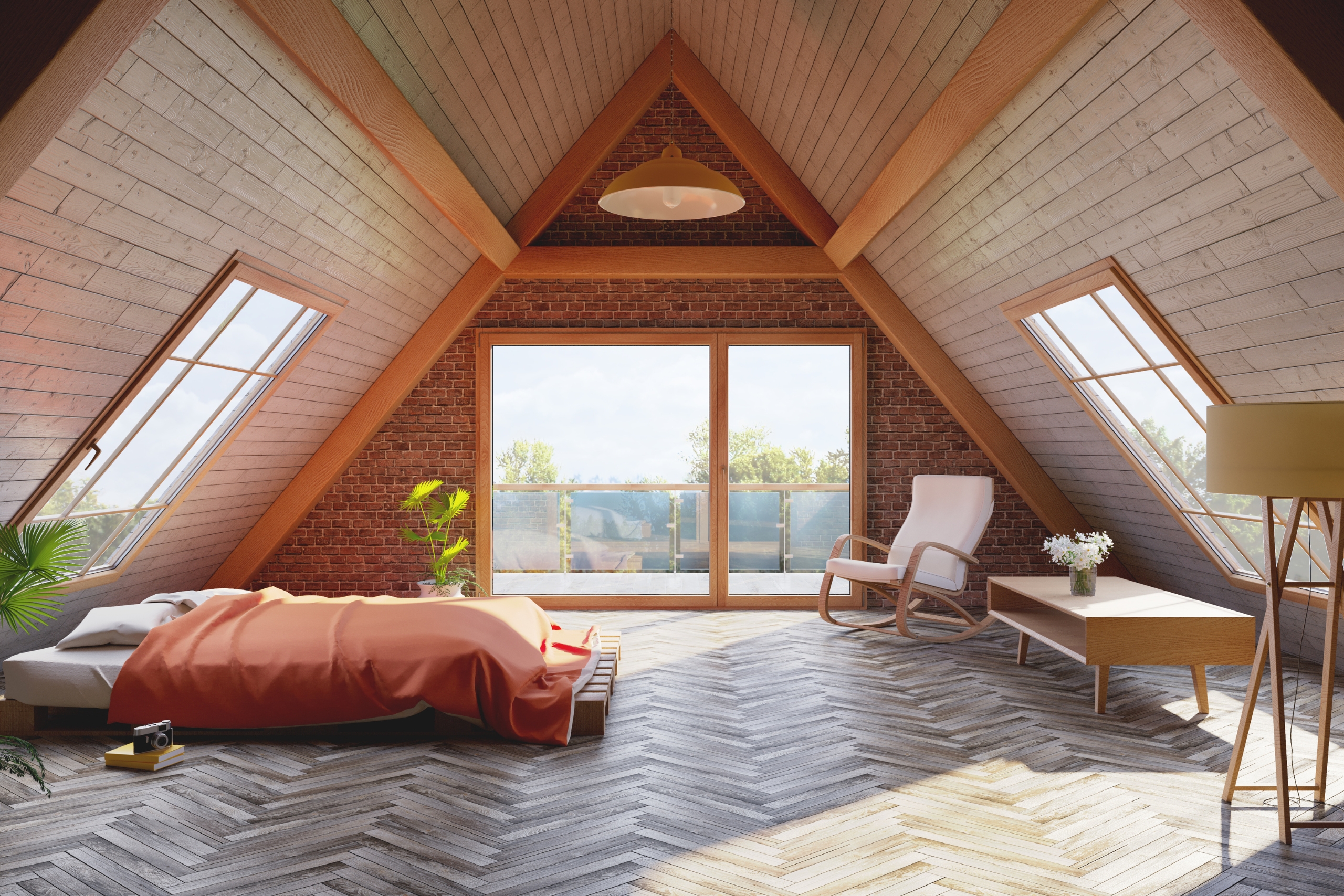
The attic is the most underestimated room in most American homes — a space whose square footage is technically counted in the house’s total area but whose actual utility for the people living beneath it is, in the majority of cases, precisely nothing. It is where the holiday decorations live in boxes that are opened twice a year. It is where old furniture goes to become permanently inaccessible. It is the room whose sloped ceilings and temperature extremes and questionable flooring have convinced successive generations of homeowners that its proper function is storage and its only legitimate visitor is the person making the annual retrieval of the Christmas boxes with a flashlight and moderate trepidation about what they might disturb up there. This is one of the most persistent and most costly domestic myths available in American home design. The attic is not a storage room by nature — it is simply a room whose transformation into useful, comfortable, genuinely inhabitable space requires a slightly different design approach than the flat-ceilinged, climate-controlled rooms below it, and whose reward for that investment of thought and sometimes modest financial commitment is the addition of some of the most characterful, most atmospheric, and most personally beloved spaces that any home improvement project can produce. The room beneath the roofline — with its sloped ceilings that create the specific enclosure of a private hideaway, its elevated position that separates it from the noise and the traffic of the floors below, and its dormer windows whose view of the neighborhood from above creates the specific quality of the nest that humans have instinctively sought in elevated, enclosed spaces since the most ancient dwellings — is a room whose potential, properly realized, frequently exceeds what most homeowners initially imagined they were working with. This guide covers the complete transformation of an attic from underused storage space to the most loved room in the house — the practical preparation whose foundation makes the space safe and comfortable, the design approaches that celebrate rather than fight the attic’s distinctive architectural character, and the specific uses whose accommodation in the attic space produces the most consistently satisfying results for the homeowners who make the conversion.
Assessing the Space: What You Have and What You Need Before You Start
The first and most important step in any attic transformation is the honest, systematic assessment of the existing space’s structural condition, its access quality, its insulation status, and its specific dimensional characteristics — the assessment whose findings determine the scope and the cost of the work required before any design or decoration decisions can meaningfully be made. The most beautifully designed attic reading nook in the world serves no one if the floor joists are insufficient to safely bear the weight of occupants and furniture, if the only access is a pull-down ladder steep enough to discourage regular use, or if the temperature swings between seasons render the space physically unusable for significant portions of the year. The structural and mechanical assessment that precedes any attic improvement investment is not the exciting part of the project — but it is the part whose honest completion is the foundation on which everything else is built.
Floor load capacity is the single most critical structural consideration in any attic conversion — attic floor joists are typically engineered only to support the weight of light storage rather than the substantially greater loads that human occupancy, furniture, and the everyday activities of a lived-in room create. The standard attic floor joist is typically designed to bear ten pounds per square foot of live load, while an occupied residential floor requires a minimum of thirty to forty pounds per square foot under current building codes — a difference that makes structural reinforcement a non-negotiable first step in any attic conversion whose intended use includes regular human occupancy. A qualified structural engineer’s assessment of the existing floor system, whose recommendation will specify the reinforcement method and scope appropriate to the specific structure, is the professional investment whose upfront cost is the smallest possible fraction of the potential cost of an inadequately supported floor whose failure would create the worst possible outcome from what began as an attractive home improvement project. Access improvement — the replacement of the pull-down attic ladder with a proper staircase whose tread dimensions, handrail provision, and headroom clearance meet building code requirements and whose use is genuinely comfortable rather than merely physically possible — is the access investment whose return in actual daily use of the converted space exceeds that of almost any design investment made within the space itself, because the room that requires an awkward climb to reach is the room that stays empty regardless of how beautifully it is designed.
Insulation and climate control are the transformation priorities whose quality most directly determines whether the converted attic is a year-round usable space or a seasonal one whose pleasant spring and fall temperatures conceal the summer heat and winter cold that inadequate thermal envelope management inevitably produces. The attic is the home’s most thermally challenged space — directly beneath the roofline that absorbs summer heat and loses winter warmth most aggressively, with the thermal bridging of exposed rafters and the often inadequate insulation of older homes creating the specific temperature extremes that make unimproved attics uninhabitable in much of the United States for significant portions of the year. The insulation approach most appropriate for a habitable attic space is the unvented hot roof assembly — the spray foam or rigid foam insulation applied directly to the underside of the roof deck whose creation of a conditioned attic space eliminates the temperature differential between the attic and the living spaces below and whose inclusion within the home’s thermal envelope makes climate control with conventional HVAC systems both effective and energy efficient. This approach typically requires professional installation and may require permits depending on local building code requirements, but its investment is the specific thermal quality whose provision is the non-negotiable foundation of the comfortable, year-round usable attic space that the conversion is designed to create.
Design Principles for Attic Spaces: Working With the Architecture, Not Against It
The attic’s most distinctive architectural features — the sloped ceilings whose angle follows the roofline, the knee walls whose low height creates the specific challenge of usable perimeter space in the lower sections of the room, and the dormer windows whose projection from the roofline creates the only vertical wall space and the most valuable natural light source in the entire room — are the features that most inexperienced attic designers attempt to minimize, work around, or visually de-emphasize in pursuit of the conventional room aesthetic that the attic fundamentally cannot and should not pretend to be. The attic that has been designed in honest acknowledgment and deliberate celebration of its specific architectural character — that has leaned into the sloped ceilings, the cozy enclosure, and the specific intimacy of the space rather than fighting it with the aesthetic conventions of the flat-ceilinged rooms below — is the attic whose specific charm most directly captures what this unusual room type is genuinely capable of producing.
The slope of the ceiling is the attic’s most defining feature and the one whose treatment most immediately communicates whether the designer has understood what makes the space special or has simply tried to make it look like something it is not. The lowest points of the sloped ceiling — the knee wall areas where the ceiling meets the floor at the perimeter of the room — are the spaces that create the most consistent design challenge because their low height makes them unusable for standing activities. The design approach that transforms this limitation into an asset is the strategic deployment of built-in storage, built-in seating, or built-in reading nooks in these low areas — the window seat whose cushioned top creates seating while the interior conceals storage, the built-in bookshelves that fill the knee wall area with the organized visual richness of a book collection rather than the wasted visual noise of unused low space, and the cozy alcove whose low ceiling creates the specific nest-like enclosure that the human instinct for the enclosed, elevated resting space most directly seeks. Light-colored ceiling treatment — the white or pale paint, the white-washed wood paneling, or the light-toned shiplap whose application to the sloped ceiling surfaces maximizes the reflection of natural light and makes the angled space feel more open and airy — is the paint and surface treatment approach whose consistent effectiveness in attic spaces makes it the most broadly applicable single visual recommendation available for the attic interior.
Dormer windows are the attic’s most valuable architectural gift — the natural light source whose provision in spaces that would otherwise be entirely dependent on artificial lighting creates the specific quality of natural daylit interior that transforms the enclosed attic from a dark, cave-like space into a genuinely pleasant, genuinely bright room. The design treatment of dormer windows that maximizes their contribution to the room’s atmosphere and their functional utility includes the creation of the window seat whose cushioned surface in the dormer bay creates the most coveted reading or relaxing spot in the entire house — the specific combination of natural light, elevated view, and the cozy enclosure of the dormer’s three walls and overhead space creating the domestic equivalent of the window nook whose appearance in illustrated books and film sets communicates something universally understood about the human desire for the cozy, light-filled, slightly elevated private space that the dormer window alcove provides in the most naturally perfect available form.
The Attic as a Reading Room or Personal Library: The Ultimate Cozy Escape
Of all the possible uses to which a converted attic can be put, the creation of a dedicated reading room or personal library is the one that most completely and most naturally exploits the attic’s specific architectural character — the enclosure, the quiet, the elevated remove from the household’s main activity, and the specific intimacy of the sloped-ceiling space that creates the reading room atmosphere of absorbed, private, completely personal intellectual pleasure whose quality no main-floor room in the house can quite replicate. The reading room attic conversion is the project that most consistently produces the specific result that home improvement projects most aspire to but least reliably achieve: the room that the person who created it uses every day, that becomes the specific domestic space they most look forward to occupying, and that earns the repeated description of the favorite room in the house that the genuinely successful home improvement project always produces.
The built-in bookshelf is the single design element whose presence most completely transforms the attic into the personal library — the floor-to-ceiling shelving along the vertical wall sections and the lower, knee-wall-height shelving that fills the perimeter low areas with the warm visual character of a curated book collection creates both the visual atmosphere and the practical storage of the reading room whose establishment as a dedicated literary space the book collection itself most powerfully communicates. The specific shelf design most appropriate for the attic reading room uses the knee wall areas for the lower shelving runs whose proportions match the low-ceiling perimeter, the vertical gable end walls for the full-height shelving whose most dramatic and most visually impressive presentation is available in the specific wall areas where the roofline creates maximum vertical clearance, and the areas flanking dormer windows for the bespoke window seat built-ins whose combination of seating, concealed storage, and reading-position integration creates the specific reading nook whose quality as a reading environment is unmatched by any separate furniture arrangement. The lighting design of the attic reading room — the combination of the natural light from dormer windows, the warm ambient lighting of recessed ceiling fixtures in the highest parts of the sloped ceiling, and the specific task lighting of the adjustable reading lamp whose directed illumination serves the page without flooding the room creates the layered light environment that makes extended evening reading the pleasure it is.
The Attic as a Creative Studio: Art, Music, Writing, and Making
The attic’s specific quality of remove from the household’s main activity — the separation from the kitchen sounds, the television, the doorbell, and the general domestic traffic of the lower floors — makes it the most naturally appropriate space in any home for the dedicated creative studio whose work most directly benefits from the sustained, uninterrupted focus that the attic’s physical separation from distraction most consistently provides. The artist who works in oils, the musician who practices an instrument, the writer whose sustained concentration the noise of the household below can disrupt, and the crafts person whose working materials and whose production mess are most comfortably confined to a specific room rather than spread across the general living space all find in the attic the specific combination of dedicated space, physical separation, and the specific permission of a room that belongs entirely to the creative work that the most productive creative practice most reliably requires.
The art studio attic benefits from the natural light that north-facing skylights provide with the consistent, diffused quality that artists have always valued for its freedom from the shifting shadows and the direct sun glare that direct-exposure windows create — the north skylight installation, whose specific orientation provides the even, shadow-free natural light whose quality is unmatched by any artificial lighting for the accurate perception and reproduction of color that visual art most directly requires. Flooring in the art studio attic should balance the aesthetic quality that makes the space pleasant to work in with the practical durability that the inevitability of paint drops, solvent spills, and the general material richness of an active studio creates — the sealed concrete or the quality vinyl plank whose combination of easy cleaning, durability, and the industrial-aesthetic character that many artists find both practically and aesthetically appropriate for their workspace represents the most consistently recommended studio flooring available for the attic conversion.
The music practice attic benefits from the specific acoustic treatment whose installation transforms the hard, parallel surfaces of the unimproved attic into the acoustically appropriate environment that instrumental practice most directly rewards — the acoustic panels whose placement on the walls and ceiling surfaces addresses the specific reflection patterns of the room, the bass traps in the corners whose absorption of low-frequency energy prevents the mud that corner bass accumulation creates in small rooms, and the combination of hard and soft surfaces whose specific ratio creates the acoustically balanced environment that makes the room both pleasant to play in and useful for practice recording. The
The attic is the most underestimated room in most American homes — a space whose square footage is technically counted in the house’s total area but whose actual utility for the people living beneath it is, in the majority of cases, precisely nothing. It is where the holiday decorations live in boxes that are opened twice a year. It is where old furniture goes to become permanently inaccessible. It is the room whose sloped ceilings and temperature extremes and questionable flooring have convinced successive generations of homeowners that its proper function is storage and its only legitimate visitor is the person making the annual retrieval of the Christmas boxes with a flashlight and moderate trepidation about what they might disturb up there. This is one of the most persistent and most costly domestic myths available in American home design. The attic is not a storage room by nature — it is simply a room whose transformation into useful, comfortable, genuinely inhabitable space requires a slightly different design approach than the flat-ceilinged, climate-controlled rooms below it, and whose reward for that investment of thought and sometimes modest financial commitment is the addition of some of the most characterful, most atmospheric, and most personally beloved spaces that any home improvement project can produce. The room beneath the roofline — with its sloped ceilings that create the specific enclosure of a private hideaway, its elevated position that separates it from the noise and the traffic of the floors below, and its dormer windows whose view of the neighborhood from above creates the specific quality of the nest that humans have instinctively sought in elevated, enclosed spaces since the most ancient dwellings — is a room whose potential, properly realized, frequently exceeds what most homeowners initially imagined they were working with. This guide covers the complete transformation of an attic from underused storage space to the most loved room in the house — the practical preparation whose foundation makes the space safe and comfortable, the design approaches that celebrate rather than fight the attic’s distinctive architectural character, and the specific uses whose accommodation in the attic space produces the most consistently satisfying results for the homeowners who make the conversion.
Assessing the Space: What You Have and What You Need Before You Start
The first and most important step in any attic transformation is the honest, systematic assessment of the existing space’s structural condition, its access quality, its insulation status, and its specific dimensional characteristics — the assessment whose findings determine the scope and the cost of the work required before any design or decoration decisions can meaningfully be made. The most beautifully designed attic reading nook in the world serves no one if the floor joists are insufficient to safely bear the weight of occupants and furniture, if the only access is a pull-down ladder steep enough to discourage regular use, or if the temperature swings between seasons render the space physically unusable for significant portions of the year. The structural and mechanical assessment that precedes any attic improvement investment is not the exciting part of the project — but it is the part whose honest completion is the foundation on which everything else is built.
Floor load capacity is the single most critical structural consideration in any attic conversion — attic floor joists are typically engineered only to support the weight of light storage rather than the substantially greater loads that human occupancy, furniture, and the everyday activities of a lived-in room create. The standard attic floor joist is typically designed to bear ten pounds per square foot of live load, while an occupied residential floor requires a minimum of thirty to forty pounds per square foot under current building codes — a difference that makes structural reinforcement a non-negotiable first step in any attic conversion whose intended use includes regular human occupancy. A qualified structural engineer’s assessment of the existing floor system, whose recommendation will specify the reinforcement method and scope appropriate to the specific structure, is the professional investment whose upfront cost is the smallest possible fraction of the potential cost of an inadequately supported floor whose failure would create the worst possible outcome from what began as an attractive home improvement project. Access improvement — the replacement of the pull-down attic ladder with a proper staircase whose tread dimensions, handrail provision, and headroom clearance meet building code requirements and whose use is genuinely comfortable rather than merely physically possible — is the access investment whose return in actual daily use of the converted space exceeds that of almost any design investment made within the space itself, because the room that requires an awkward climb to reach is the room that stays empty regardless of how beautifully it is designed.
Insulation and climate control are the transformation priorities whose quality most directly determines whether the converted attic is a year-round usable space or a seasonal one whose pleasant spring and fall temperatures conceal the summer heat and winter cold that inadequate thermal envelope management inevitably produces. The attic is the home’s most thermally challenged space — directly beneath the roofline that absorbs summer heat and loses winter warmth most aggressively, with the thermal bridging of exposed rafters and the often inadequate insulation of older homes creating the specific temperature extremes that make unimproved attics uninhabitable in much of the United States for significant portions of the year. The insulation approach most appropriate for a habitable attic space is the unvented hot roof assembly — the spray foam or rigid foam insulation applied directly to the underside of the roof deck whose creation of a conditioned attic space eliminates the temperature differential between the attic and the living spaces below and whose inclusion within the home’s thermal envelope makes climate control with conventional HVAC systems both effective and energy efficient. This approach typically requires professional installation and may require permits depending on local building code requirements, but its investment is the specific thermal quality whose provision is the non-negotiable foundation of the comfortable, year-round usable attic space that the conversion is designed to create.
Design Principles for Attic Spaces: Working With the Architecture, Not Against It
The attic’s most distinctive architectural features — the sloped ceilings whose angle follows the roofline, the knee walls whose low height creates the specific challenge of usable perimeter space in the lower sections of the room, and the dormer windows whose projection from the roofline creates the only vertical wall space and the most valuable natural light source in the entire room — are the features that most inexperienced attic designers attempt to minimize, work around, or visually de-emphasize in pursuit of the conventional room aesthetic that the attic fundamentally cannot and should not pretend to be. The attic that has been designed in honest acknowledgment and deliberate celebration of its specific architectural character — that has leaned into the sloped ceilings, the cozy enclosure, and the specific intimacy of the space rather than fighting it with the aesthetic conventions of the flat-ceilinged rooms below — is the attic whose specific charm most directly captures what this unusual room type is genuinely capable of producing.
The slope of the ceiling is the attic’s most defining feature and the one whose treatment most immediately communicates whether the designer has understood what makes the space special or has simply tried to make it look like something it is not. The lowest points of the sloped ceiling — the knee wall areas where the ceiling meets the floor at the perimeter of the room — are the spaces that create the most consistent design challenge because their low height makes them unusable for standing activities. The design approach that transforms this limitation into an asset is the strategic deployment of built-in storage, built-in seating, or built-in reading nooks in these low areas — the window seat whose cushioned top creates seating while the interior conceals storage, the built-in bookshelves that fill the knee wall area with the organized visual richness of a book collection rather than the wasted visual noise of unused low space, and the cozy alcove whose low ceiling creates the specific nest-like enclosure that the human instinct for the enclosed, elevated resting space most directly seeks. Light-colored ceiling treatment — the white or pale paint, the white-washed wood paneling, or the light-toned shiplap whose application to the sloped ceiling surfaces maximizes the reflection of natural light and makes the angled space feel more open and airy — is the paint and surface treatment approach whose consistent effectiveness in attic spaces makes it the most broadly applicable single visual recommendation available for the attic interior.
Dormer windows are the attic’s most valuable architectural gift — the natural light source whose provision in spaces that would otherwise be entirely dependent on artificial lighting creates the specific quality of natural daylit interior that transforms the enclosed attic from a dark, cave-like space into a genuinely pleasant, genuinely bright room. The design treatment of dormer windows that maximizes their contribution to the room’s atmosphere and their functional utility includes the creation of the window seat whose cushioned surface in the dormer bay creates the most coveted reading or relaxing spot in the entire house — the specific combination of natural light, elevated view, and the cozy enclosure of the dormer’s three walls and overhead space creating the domestic equivalent of the window nook whose appearance in illustrated books and film sets communicates something universally understood about the human desire for the cozy, light-filled, slightly elevated private space that the dormer window alcove provides in the most naturally perfect available form.
The Attic as a Reading Room or Personal Library: The Ultimate Cozy Escape
Of all the possible uses to which a converted attic can be put, the creation of a dedicated reading room or personal library is the one that most completely and most naturally exploits the attic’s specific architectural character — the enclosure, the quiet, the elevated remove from the household’s main activity, and the specific intimacy of the sloped-ceiling space that creates the reading room atmosphere of absorbed, private, completely personal intellectual pleasure whose quality no main-floor room in the house can quite replicate. The reading room attic conversion is the project that most consistently produces the specific result that home improvement projects most aspire to but least reliably achieve: the room that the person who created it uses every day, that becomes the specific domestic space they most look forward to occupying, and that earns the repeated description of the favorite room in the house that the genuinely successful home improvement project always produces.
The built-in bookshelf is the single design element whose presence most completely transforms the attic into the personal library — the floor-to-ceiling shelving along the vertical wall sections and the lower, knee-wall-height shelving that fills the perimeter low areas with the warm visual character of a curated book collection creates both the visual atmosphere and the practical storage of the reading room whose establishment as a dedicated literary space the book collection itself most powerfully communicates. The specific shelf design most appropriate for the attic reading room uses the knee wall areas for the lower shelving runs whose proportions match the low-ceiling perimeter, the vertical gable end walls for the full-height shelving whose most dramatic and most visually impressive presentation is available in the specific wall areas where the roofline creates maximum vertical clearance, and the areas flanking dormer windows for the bespoke window seat built-ins whose combination of seating, concealed storage, and reading-position integration creates the specific reading nook whose quality as a reading environment is unmatched by any separate furniture arrangement. The lighting design of the attic reading room — the combination of the natural light from dormer windows, the warm ambient lighting of recessed ceiling fixtures in the highest parts of the sloped ceiling, and the specific task lighting of the adjustable reading lamp whose directed illumination serves the page without flooding the room creates the layered light environment that makes extended evening reading the pleasure it is.
The Attic as a Creative Studio: Art, Music, Writing, and Making
The attic’s specific quality of remove from the household’s main activity — the separation from the kitchen sounds, the television, the doorbell, and the general domestic traffic of the lower floors — makes it the most naturally appropriate space in any home for the dedicated creative studio whose work most directly benefits from the sustained, uninterrupted focus that the attic’s physical separation from distraction most consistently provides. The artist who works in oils, the musician who practices an instrument, the writer whose sustained concentration the noise of the household below can disrupt, and the crafts person whose working materials and whose production mess are most comfortably confined to a specific room rather than spread across the general living space all find in the attic the specific combination of dedicated space, physical separation, and the specific permission of a room that belongs entirely to the creative work that the most productive creative practice most reliably requires.
The art studio attic benefits from the natural light that north-facing skylights provide with the consistent, diffused quality that artists have always valued for its freedom from the shifting shadows and the direct sun glare that direct-exposure windows create — the north skylight installation, whose specific orientation provides the even, shadow-free natural light whose quality is unmatched by any artificial lighting for the accurate perception and reproduction of color that visual art most directly requires. Flooring in the art studio attic should balance the aesthetic quality that makes the space pleasant to work in with the practical durability that the inevitability of paint drops, solvent spills, and the general material richness of an active studio creates — the sealed concrete or the quality vinyl plank whose combination of easy cleaning, durability, and the industrial-aesthetic character that many artists find both practically and aesthetically appropriate for their workspace represents the most consistently recommended studio flooring available for the attic conversion.
The music practice attic benefits from the specific acoustic treatment whose installation transforms the hard, parallel surfaces of the unimproved attic into the acoustically appropriate environment that instrumental practice most directly rewards — the acoustic panels whose placement on the walls and ceiling surfaces addresses the specific reflection patterns of the room, the bass traps in the corners whose absorption of low-frequency energy prevents the mud that corner bass accumulation creates in small rooms, and the combination of hard and soft surfaces whose specific ratio creates the acoustically balanced environment that makes the room both pleasant to play in and useful for practice recording. The home and garden of the house with a creatively converted attic is a home whose specific spatial richness — the dedicated creative space whose existence elevates the quality of the creative practice it supports — is most completely expressed in the specific room whose transformation from underused storage to beloved studio most directly reflects the commitment to living fully and intentionally in every square foot of the space available.
The Attic as a Relaxation Retreat: Home Office, Meditation Space, or Guest Room
The attic’s qualities of quiet, enclosure, and elevated remove from the main household make it an ideal location for the dedicated relaxation and restoration spaces whose provision in the contemporary home — the meditation room, the yoga space, the quiet reading or journaling retreat, and the specific sanctuary from the stimulation and the demand of ordinary domestic life — is increasingly recognized as a genuine wellbeing investment rather than a luxury whose justification requires the apology of productivity. The person who creates a dedicated relaxation space in their attic is making the specific home improvement investment that most directly improves the daily quality of their mental and emotional life, whose return in reduced stress, improved sleep quality, and the specific restoration of the spirit that genuine quiet and genuine personal space provide is both real and measurable across the weeks and months of consistent use.
The home office attic is the converted use whose combination of the quiet separation from household distraction and the specific psychological quality of the dedicated work space whose boundary from the domestic space most effectively supports the sustained, focused professional work that the home office environment most needs to enable is the work-from-home configuration that most consistently produces the professional performance and the work-life boundary quality that the undedicated home office — the laptop on the kitchen table, the desk in the bedroom corner — most consistently fails to achieve. The specific design priorities for the home office attic include the high-speed internet connectivity whose wired or high-quality wireless provision in the attic space requires advance planning in the conversion process, the ergonomic furniture whose quality of chair, desk height, and monitor positioning prevents the specific physical discomfort of the poorly configured work environment, and the window and artificial lighting whose combination prevents the specific eye strain and the headache that inadequate working light most commonly produces.
The guest bedroom attic — the space that provides the most complete privacy and the most distinct separation from the host family’s daily life that any guest accommodation can offer — benefits from the specific cozy character of the sloped-ceiling, intimate-scaled attic room whose atmosphere many guests describe as the most charming and most memorable sleeping environment their hosts have provided, with the specific warmth of the enclosed space, the dormer window view, and the personal library or the reading corner whose presence transforms a functional sleeping room into a genuinely hospitable guest retreat. The specific guest bedroom attic design priorities include the ceiling fan or window-mounted AC unit whose summer cooling makes the space comfortable for guests during the warmer months when the attic’s elevated position and its proximity to the roof make temperature management the most critical comfort consideration available in any attic guest accommodation.
Conclusion
The attic transformation is one of the most rewarding home improvement investments available to any homeowner willing to look beyond the pull-down ladder and the Christmas boxes to the specific architectural potential of the space above — a potential whose realization through the structural preparation that makes the space safe, the insulation and climate control that makes it comfortable year-round, the design approach that celebrates rather than fights its distinctive character, and the specific use whose accommodation in the attic space produces the most consistent daily delight creates one of the most beloved and most personally meaningful rooms in the entire home. The reading room whose cozy enclosure and its personal library creates the most private and most completely absorbing domestic retreat available, the creative studio whose quiet separation and dedicated space enables the most sustained and the most productive creative work the household produces, the meditation sanctuary whose specific stillness and elevation from the household’s daily activity creates the restoration that the body and the mind most urgently need, and the charming guest room whose distinctive character is remembered by every visitor who sleeps beneath its sloped ceiling — each of these attic conversions is the product of the specific willingness to see the potential that most homeowners overlook in the room above their heads and the specific commitment to realizing that potential with the thought, the care, and the genuine design intelligence that every room in a well-loved home deserves.
of the house with a creatively converted attic is a home whose specific spatial richness — the dedicated creative space whose existence elevates the quality of the creative practice it supports — is most completely expressed in the specific room whose transformation from underused storage to beloved studio most directly reflects the commitment to living fully and intentionally in every square foot of the space available.
The Attic as a Relaxation Retreat: Home Office, Meditation Space, or Guest Room
The attic’s qualities of quiet, enclosure, and elevated remove from the main household make it an ideal location for the dedicated relaxation and restoration spaces whose provision in the contemporary home — the meditation room, the yoga space, the quiet reading or journaling retreat, and the specific sanctuary from the stimulation and the demand of ordinary domestic life — is increasingly recognized as a genuine wellbeing investment rather than a luxury whose justification requires the apology of productivity. The person who creates a dedicated relaxation space in their attic is making the specific home improvement investment that most directly improves the daily quality of their mental and emotional life, whose return in reduced stress, improved sleep quality, and the specific restoration of the spirit that genuine quiet and genuine personal space provide is both real and measurable across the weeks and months of consistent use.
The home office attic is the converted use whose combination of the quiet separation from household distraction and the specific psychological quality of the dedicated work space whose boundary from the domestic space most effectively supports the sustained, focused professional work that the home office environment most needs to enable is the work-from-home configuration that most consistently produces the professional performance and the work-life boundary quality that the undedicated home office — the laptop on the kitchen table, the desk in the bedroom corner — most consistently fails to achieve. The specific design priorities for the home office attic include the high-speed internet connectivity whose wired or high-quality wireless provision in the attic space requires advance planning in the conversion process, the ergonomic furniture whose quality of chair, desk height, and monitor positioning prevents the specific physical discomfort of the poorly configured work environment, and the window and artificial lighting whose combination prevents the specific eye strain and the headache that inadequate working light most commonly produces.
The guest bedroom attic — the space that provides the most complete privacy and the most distinct separation from the host family’s daily life that any guest accommodation can offer — benefits from the specific cozy character of the sloped-ceiling, intimate-scaled attic room whose atmosphere many guests describe as the most charming and most memorable sleeping environment their hosts have provided, with the specific warmth of the enclosed space, the dormer window view, and the personal library or the reading corner whose presence transforms a functional sleeping room into a genuinely hospitable guest retreat. The specific guest bedroom attic design priorities include the ceiling fan or window-mounted AC unit whose summer cooling makes the space comfortable for guests during the warmer months when the attic’s elevated position and its proximity to the roof make temperature management the most critical comfort consideration available in any attic guest accommodation.
Conclusion
The attic transformation is one of the most rewarding home improvement investments available to any homeowner willing to look beyond the pull-down ladder and the Christmas boxes to the specific architectural potential of the space above — a potential whose realization through the structural preparation that makes the space safe, the insulation and climate control that makes it comfortable year-round, the design approach that celebrates rather than fights its distinctive character, and the specific use whose accommodation in the attic space produces the most consistent daily delight creates one of the most beloved and most personally meaningful rooms in the entire home. The reading room whose cozy enclosure and its personal library creates the most private and most completely absorbing domestic retreat available, the creative studio whose quiet separation and dedicated space enables the most sustained and the most productive creative work the household produces, the meditation sanctuary whose specific stillness and elevation from the household’s daily activity creates the restoration that the body and the mind most urgently need, and the charming guest room whose distinctive character is remembered by every visitor who sleeps beneath its sloped ceiling — each of these attic conversions is the product of the specific willingness to see the potential that most homeowners overlook in the room above their heads and the specific commitment to realizing that potential with the thought, the care, and the genuine design intelligence that every room in a well-loved home deserves.